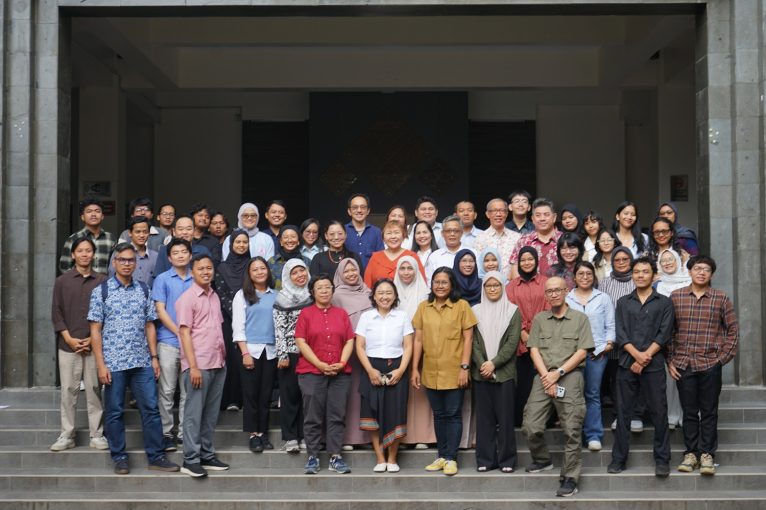
From Monday to Wednesday, February 9–11, 2026, the Department of History at Universitas Gadjah Mada, in collaboration with the SEASREP Foundation, organized a Workshop and Seminar on writing and oral history studies in Southeast Asia. The event was attended by academics and students from various countries in Asia and Southeast Asia, including the National University of Singapore, Kyoto University, University of the Philippines Diliman, Universiti Malaya, Universiti Brunei Darussalam, National Chung Cheng University, and Universitas Gadjah Mada as the host. Also present were Dr. Abdul Wahid, M.Hum., M.Phil., and Satrio Dwicahyo, S.S., M.Sc., M.A., serving as Head of the Department and lecturer at the Department of History UGM. In addition, the event was attended by Dr. Maria I. Diokno, Professor Emeritus at the University of the Philippines Diliman and Executive Director of the SEASREP Foundation.
The workshop and seminar lasted three consecutive days, featuring discussions not only on the development of oral history studies in Southeast Asia but also on training, mentoring, and practical research in oral history with a Southeast Asian focus. Participants had the opportunity to learn directly from speakers including Dr. Kar-Yen Leong, Miria Asaba, M.A., and Dr. Kisho Tsuchiya. They delivered lectures on the stages and methods of oral history research, data analysis, and the preservation of oral history sources. Participants were not only engaged in discussions and lectures but also given the chance to practice the research methods presented during the sessions. As part of the program, on the second day, participants enjoyed a cultural performance of Wayang Beber by the Taring Padi collective.
The event was conducted in an active and interactive atmosphere, with speakers and participants engaging in lively discussions on the topics presented. Moreover, this workshop and seminar demonstrated the commitment of the Department of History at Universitas Gadjah Mada to advancing oral history methodologies as a means of addressing historiographical challenges in Southeast Asia, which often face difficulties in accessing written archival sources.
Author: Mochamad Rizky Saputra